


- What is a digital storefront?
- How do restaurants benefit from a digital storefront?
- What you should do before getting started on your website.
- What you need on your digital storefront.
- How you can use your digital storefront to drive revenue for your restaurant.
- You’ve got the plan. Now get the cash to put it in motion.
If you’re running a restaurant today, having a strong digital presence is something you need to have. That starts with your website.
Even if you’re active on social media, skipping a dedicated site means you’re missing out on key opportunities to win new customers and control your brand online. Without one, diners often rely on third-party listings filled with outdated menus and unflattering photos.
In this blog post, we’ll show you how building a digital storefront can help your restaurant bring in more orders, fill more tables, and grow your customer base on your terms.
What is a digital storefront?
Think of your website as your digital storefront. It’s where people can learn about your food, place an order, make a reservation, or check your hours—without relying on third parties. It’s open 24/7, and it reflects what your business is actually about.
If your restaurant doesn’t have a website, you’re letting other people—and other platforms—tell your story for you. Plus, 77% of potential diners look at your website before visiting you!
When someone searches for your place online and there’s no website, they might end up on sites like Yelp or TripAdvisor. That’s where they see unclaimed listings, old menus, bad photos, and reviews you never had the chance to respond to.
Plus, when your site connects to your ordering system, marketing tools, or POS system, it also helps drive repeat customers. A website is a must.
| Planning other projects for your restaurant? Discover your financing opportunities: |
How do restaurants benefit from a digital storefront?
A good website helps your customers find what they need, fast.
1. Make it easy for people to choose your restaurant
When someone’s hungry, they don’t want to guess. Your website gives them a one-stop spot to find everything they care about: your hours, your menu, where to park, whether you take reservations, and if they can place a delivery order online.
2. Use data to improve service and sales
Your digital storefront collects useful data that helps you make better decisions. Want to know what people order most? Which nights are busiest? Which promos actually drive traffic? A smart online system helps you track it all. That way, you can run specials people actually want—and improve what isn’t working.
3. Make ordering easy
51% of diners like to order straight from your website. Plus, today’s customers expect to tap, scroll, and pay. They don’t want to call or wait in line.
With online ordering on your website, they can pick what they want and check out in minutes. That means fewer abandoned carts, fewer errors, and more orders coming in—even while your staff is busy serving the dining room.
4. Promote deals that drive more revenue
A well-timed offer—like free delivery or a discount on a second entrée—can turn a small order into a big one. Your digital storefront is the best place to showcase promotions that move the needle. If it’s a lunch special, a family meal bundle, or a first-time customer discount, your website gives you space to test ideas and encourage bigger check sizes.
5. Show up when locals search for a bite
If someone nearby searches for “best pizza near me,” you want your restaurant to pop up first. A well-built website helps make that happen.
Local SEO (search engine optimization) helps Google match your site to people searching for places to eat in your area. That means more eyes on your menu, more traffic to your site, and more orders rolling in.
6. Fill seats without answering the phone
Most customers would rather book a table online than call. With a reservation feature built into your site, you give guests a fast, easy way to plan their visit—anytime, from any device. You’ll free up your staff, reduce missed calls, and fill more seats on slow nights.
Want to take it up a notch? Let guests pre-order their meals when they book.
Put your website to work—without ever slowing down.Upgrading your digital storefront takes cash. Credibly makes it fast and simple to secure the capital you need. |
What you should do before getting started on your website.
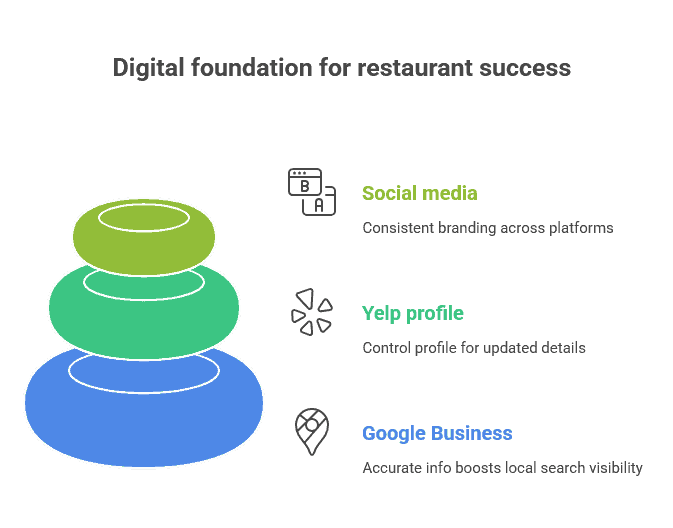
Getting a website is a big step—but it works best when it’s backed by a solid foundation. Take a few simple steps to make sure your business is easy to find, easy to recognize, and ready to bring customers back.
1. Start with Google Business
This is what pops up when someone searches your restaurant’s name or types in “brunch near me.” It shows your hours, location, reviews, photos, and links to your site. Go to business.google.com, claim your listing, and fill it out completely.
The more accurate your information, the more likely Google is to show your business in local search results.
2. Claim your Yelp page
Yelp is still one of the most popular platforms people use to check out restaurants. If your page isn’t claimed, it might be filled with old photos, missing details, or outdated hours.
Take control of your profile. Add photos, update your contact info, and make sure your website link is included.
3. Cover your bases on social media
Instagram, Facebook, and TikTok help people discover your restaurant—and they need to know they’ve found the right place.
Set up (or clean up) your social profiles and make sure your branding, contact info, and tone are consistent across the board. Customers will check more than one channel before they book a table or place an order.
What you need on your digital storefront.
Once you’ve got a website, think of it as a digital version of your front-of-house—welcoming, helpful, and built to make people want to order. Here’s what to include.
1. Online ordering that’s easy to use
Customers are used to ordering food online. If you’re based in an urban area, 40% of potential customers are using food delivery apps weekly. Even if you don’t offer delivery yourself, giving people the option to place a pickup order online saves time and keeps your kitchen moving.
2. High-quality photos of your food
Sharp, well-lit pictures of your signature dishes help sell them before the first bite. They also give new customers an idea of portion sizes and menu options they may not know by name.
3. A menu people can actually read
Avoid uploading your menu as a PDF or image. Instead, list your items directly on your website. That makes it easier for mobile users to scroll through, and it lets Google pick up your content, which helps with SEO.
4. Write clear menu descriptions
A good menu description highlights what’s in the dish, how it’s prepared, and what it tastes like. It should also call out ingredients or prep methods that help people with dietary needs feel safe ordering from you.
5. Clear contact info, right where they need it
No one should have to hunt for your phone number or wonder when you’re open. Display your hours, address, and contact details on every page of your site. Better yet, make your phone number and email clickable—so customers can call, message, or book a table with just a tap.
6. Let guests opt into email updates
Your website is the perfect place to grow your email list. Use that list to send out exclusive offers, event invites, and promotions that keep your restaurant top of mind. Every sign-up is a chance to turn a one-time visitor into a regular.
7. Make your website accessible to all
Everyone should be able to use your site, no matter their abilities. That means including things like alt text for images, labels on form fields, and clear navigation that works with screen readers.
How you can use your digital storefront to drive revenue for your restaurant.
Done right, your website’s restaurant can turn browsers into buyers and one-time visitors into loyal fans. Here’s how to make it work harder for your bottom line.
1. Build trust with real reviews
When someone’s deciding where to eat, reviews matter. Pull in your best ratings from Google, Yelp, and other platforms and display them front and center. Seeing positive feedback from real guests builds credibility fast and can nudge someone from “maybe” to “let’s order now.”
You can also encourage happy customers to leave reviews of your restaurant or post about it on their social media.
2. Place a clear ‘Order Now’ button where people can see it
Put an “Order Now” button in your site’s header and throughout key pages. Make it easy to spot and simple to understand. It should be one of the first things someone sees when they land on your homepage—and it should work just as well on mobile as it does on desktop.
3. Give top dishes their own spotlight
Create dedicated pages for your most popular items. This helps your site show up in search results when people look for specific dishes near them.
For example, a page just for your Nashville hot chicken sandwich can help you rank higher when someone searches for exactly that in your area.
4. Show progress toward rewards
If you offer a loyalty program, show guests how close they are to their next perk. Whether it’s a free dessert or $5 off, visual progress helps drive repeat visits.
When people know how many points they need to unlock a reward, they’re more likely to come back—and spend more to get there.
5. Offer a subscription and lock in repeat business
Want more predictable income and steady orders? A subscription model could be the answer. It works just like those auto-ship groceries or coffee club deliveries—only with your food.
Here’s how it works: customers pay upfront for weekly or monthly meals from your restaurant. Maybe it’s Friday night dinners. Maybe it’s their favorite lunch combo delivered every Monday.
Your digital storefront is a powerful growth tool—but building it right takes more than ideas. It takes working capital.