

- What is a tariff?
- How tariffs affect small businesses
- The current impact of tariffs on small businesses (and what the current status means)
- Five things business owners can do to mitigate the impact of tariffs on their small business
- Is it more difficult to manage your bottom line?
Small business tariffs can shift the cost of doing business fast. If your small business imports materials or exports products, changes in trade policy can raise expenses and reduce your profit margins.
Additionally, you cover the cost, not your suppliers, and that can require difficult decisions about pricing and planning.
In an unpredictable economic environment, even small shifts in tariffs or trade agreements can impact how you manage inventory, cash flow, and vendor relationships. Staying financially flexible is key.
In this blog post, we’ll break down what tariffs mean for your business, how to adapt when policies shift, and how to keep your finances steady, regardless of changes in the global economy.
What is a tariff?
Tariffs are additional charges imposed on imported goods. 97% of importers in the U.S. are small businesses.
When the U.S. puts a tariff on something made overseas, that item gets more expensive to bring in. This means higher costs for businesses like yours, and often, higher prices for your customers.
The idea behind tariffs is to give local producers a boost by making foreign products less attractive. While this is the intent, it can also reduce your margins and limit your options.
There are three main types:
- Ad valorem: A percentage based on the product’s value
- Specific: A flat fee per unit
- Compound: A mix of both
Then there’s de minimis shipping. If an imported package is worth under $800, it usually skips tariffs. That’s how many low-cost e-commerce brands keep their prices so low when shipping from overseas.
Keep pace with costs.Tap into fast, flexible funding designed for small businesses, so you can manage cash flow. |
How tariffs affect small businesses
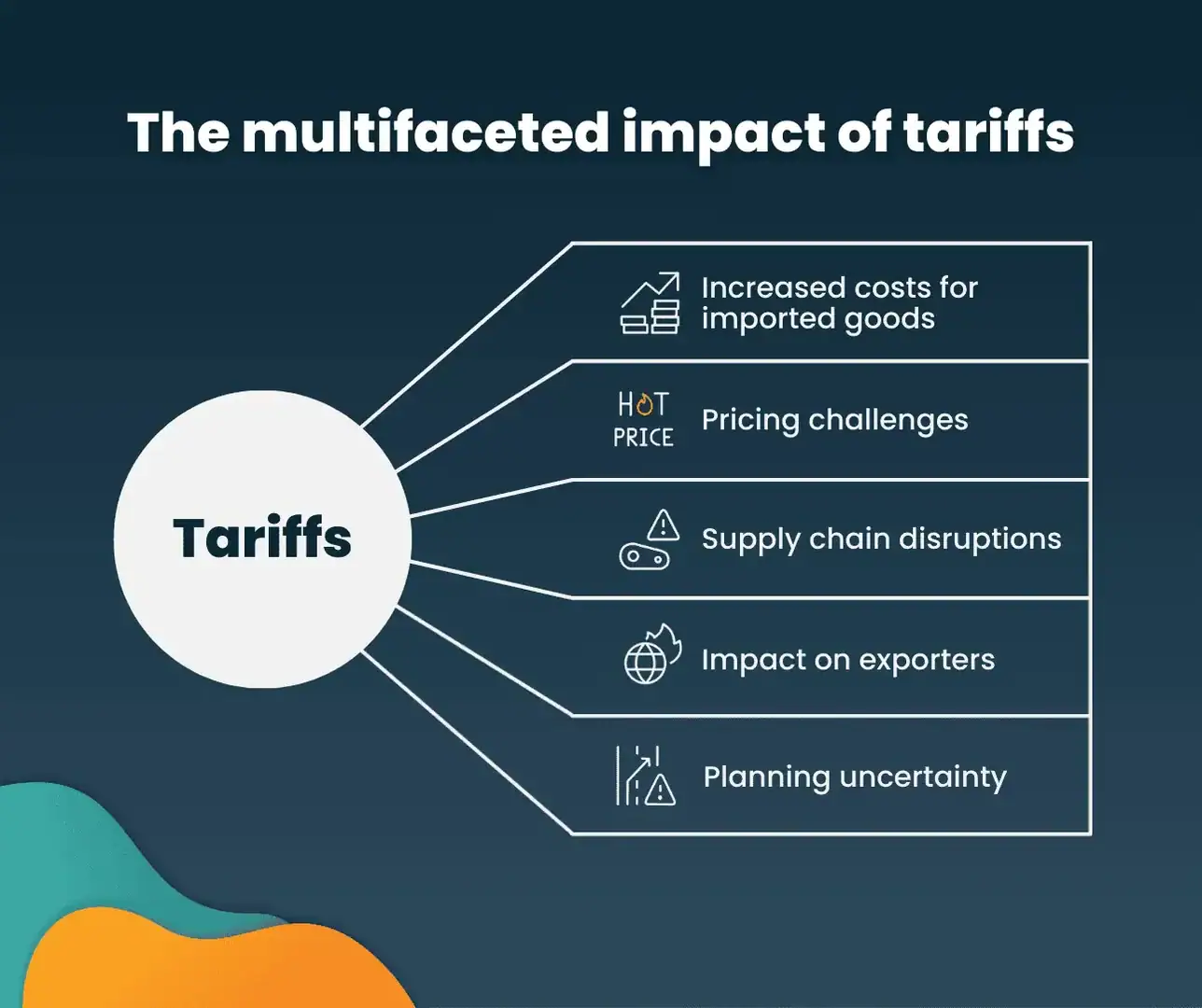
Tariffs can impact numerous aspects of running a small business, from sourcing products to determining prices. For companies with limited margins and tight planning windows, even small changes in costs or timelines can have a noticeable impact.
1. Increased costs for imported goods
When tariffs raise the price of raw materials or finished products, small businesses may see higher expenses. This can make it more challenging to maintain margins and may necessitate adjustments in pricing or sourcing.
2. Pricing challenges
To manage higher input costs, many businesses increase prices. This can affect customer retention and purchasing behavior, particularly in competitive or price-sensitive markets.
3. Supply chain disruptions
Tariffs can lead to delays or changes in supplier availability, mainly if materials are sourced from overseas. This can create gaps in inventory, lead to delayed order fulfillment, or necessitate the need to find alternative suppliers.
4. Impact on exporters
Approximately 300,000 U.S. small- and medium-sized enterprises (SMEs) export to foreign markets, including Canada, Mexico, China, Japan, and the United Kingdom.
5. Planning uncertainty
Tariff shifts can make it more challenging to forecast expenses, revenue, and demand. With policies subject to change, businesses may struggle to plan ahead with confidence.
For small businesses navigating global supply chains or working with imported materials, staying informed and adaptable is key to managing tariff-related challenges.
The current impact of tariffs on small businesses (and what the current status means)
Tariffs aren’t just a policy issue; they directly affect how you run your business. When rates change, so do your costs. You might see price hikes from suppliers, slower shipments, or tighter margins.
Furthermore, if you’re like most small businesses, you don’t have unlimited resources to buy ahead or overhaul vendor contracts overnight.
If you’re sourcing parts from overseas or selling products across borders, even minor trade shifts can force major decisions.
As a result, some businesses raise prices. Others pause projects or switch suppliers, and you might even find yourself rethinking your entire supply chain.
The economic landscape is constantly in flux, making it crucial to stay financially flexible. Maintaining a firm grip on your cash flow, having backup plans for sourcing, and building a buffer for price fluctuations can help you stay ahead.
| Learn more about how financing can help you adjust to changing situations: |
Five things business owners can do to mitigate the impact of tariffs on their small business
While it’s uncertain how long current tariff policies will stay in effect, many small businesses are already adjusting to rising costs and shifting supply chains.
If you’re feeling how tariffs affect small business, here are five practical steps you can take to help manage it.
1. Broaden your supplier base.
Start by reviewing which parts of your supply chain are most exposed to tariff-related cost increases.
If you rely heavily on a single supplier or country, consider exploring alternative options to diversify your supply chain. That could mean sourcing from regions unaffected by tariffs or striking a balance between overseas and domestic providers. Consider price, availability, and quality before making changes.
2. Revisit supplier agreements.
Having an open conversation with your existing suppliers can go a long way. Ask about volume-based discounts, extended payment terms, or alternate sourcing options. With market conditions shifting across industries, some suppliers may be willing to adjust terms to maintain your partnership.
3. Reassess your pricing strategy.
If you’re facing higher input costs, evaluate how much your business can absorb and where you might need to adjust pricing. This doesn’t always mean across-the-board increases.
Gradual adjustments, bundling, or repositioning specific offerings can help maintain customer interest while covering added expenses.
4. Stay informed and plan for different outcomes.
Tariff policies can change quickly. Therefore, it’s essential to develop a plan that provides your business with some flexibility.
Stay updated through reliable sources like industry associations or government agencies, not just headline news. You can also draft multiple budget or inventory scenarios so you’re ready to shift when needed.
5. Consider product adjustments.
Review your product lineup and identify opportunities for adaptation. That could mean using different materials, reworking features, or swapping imported inputs for domestic ones—if doing so maintains quality and customer expectations.
Minor updates can help you stay competitive without sacrificing what makes your offerings strong.
If you’ve already made operational adjustments but are still feeling the financial pressure, you’re not alone. Many small businesses are facing similar challenges as costs continue to shift.